A Practical Guide to the Upset Emoji Outline Icon: Avoiding Common Pitfalls
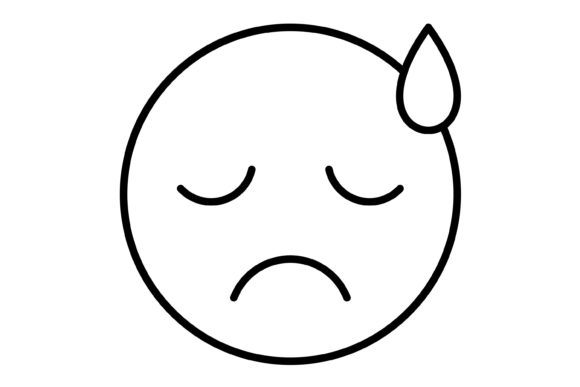
The Upset Emoji Outline Icon is more than just a simple graphic; it is a vital communication tool for the digital age. We have all been there—staring at a screen, trying to convey a nuanced emotion like disappointment, frustration, or deep thought. While a standard yellow smiley works for happiness, it often fails to capture the gravity of negative feedback or serious content. This specific icon, provided in a versatile outline style, serves as a bridge for that communication gap. It is designed to be clean, professional, and adaptable, ensuring that whether you are building a mobile app, designing a website, or creating a presentation, your message is received with the intended emotional weight.
However, the difference between a professional project and an amateur one often lies in the details of the assets you choose. Many creators make the mistake of treating icons as an afterthought, grabbing whatever low-resolution image they find first. This approach usually backfires. When you use a blurry or poorly styled icon on a high-definition screen, it breaks the user's trust. The Upset Emoji Outline Icon solves this by offering a cohesive design language. It is not just a picture; it is a vector-based tool that communicates reliability. When a user sees a crisp, well-designed icon indicating an error or a warning, they perceive the application or website as more trustworthy and polished.
The Critical Importance of File Formats
One of the most common mistakes beginners and even seasoned professionals make is underestimating the importance of file formats. You might download a zip file and see a list of extensions like AI, EPS, JPG, PNG, and SVG, feeling overwhelmed by the choices. The instinct is often to just grab the JPG because it is the most familiar. This is where things usually go wrong.
A JPG file is a raster image, meaning it is made of pixels. If you try to scale a JPG icon to fit a large banner or a high-resolution retina display, it will pixelate and look unprofessional. The Upset Emoji Outline Icon package includes formats specifically to prevent this issue. The SVG (Scalable Vector Graphics) and EPS files are vector formats. This means they are defined by mathematical equations rather than pixels. You can scale them to the size of a billboard or shrink them to the size of a favicon without losing a single bit of quality. If you are building a responsive website or a mobile app, using SVG is non-negotiable for performance and clarity.
Matching the Icon to Your Platform
Another frequent oversight is failing to match the file type to the specific requirements of the platform you are using. For instance, if you are working in Adobe Illustrator to create a complex template, you need the AI file to retain full editability. If you are using a web builder or coding a site, the SVG format is superior because it loads faster and can be manipulated with CSS code—changing colors or adding hover effects is effortless.
Consider the PNG format included in this package. It features a transparent background, which is essential for layering. Imagine placing an Upset Emoji Outline Icon over a textured background or a video. If you used a JPG, you would have an ugly white box surrounding the icon. The PNG ensures that the icon blends seamlessly into your design. A practical tip for creators is to organize these assets by use-case: keep SVGs in your "Web Assets" folder and PNGs in your "Social Media" folder. This prevents the accidental use of the wrong format and speeds up your workflow significantly.
Design Consistency and User Experience
A major pitfall in design projects is inconsistency. You might find a great icon for one emotion, but then struggle to find a matching style for other emotions. This creates a disjointed user experience. The Upset Emoji Outline Icon is part of a broader ecosystem of line icons designed for maximum usability. When you stick to a single icon family, your interface feels cohesive.
Think about the user journey. If a user encounters an error on your app, they are already frustrated. If the error message is accompanied by a jagged, low-quality, or stylistically mismatched icon, their frustration compounds. They might not articulate why, but they will feel that the app is "cheap" or "buggy." By using a consistent, high-quality outline icon, you soften the blow of the bad news. It shows that you have considered the user's experience even in moments of failure. This attention to detail is what separates a forgettable product from one that retains loyal customers.
Avoiding the "One-Size-Fits-All" Trap
It is easy to assume that an icon works perfectly out of the box for every scenario. However, context is king. An Upset Emoji Outline Icon might look perfect on a white background for a business presentation, but it might get lost on a dark-themed website. This is where the "Easy to edit and scale" feature becomes your best friend.
Do not just accept the default black outline. A better approach is to adjust the stroke weight or color to match your brand's palette. Because the icon is vector-based, you can open it in your preferred editor and tweak it in seconds. For example, if your brand uses a deep navy blue, changing the icon to match that color reinforces brand identity. Furthermore, consider the size. On a mobile device, a finger tap target needs to be large enough to interact with. Ensure that the icon is scaled appropriately so it is not just visible, but functional. A tiny icon might look cute, but if a user cannot tap it to dismiss a notification, it fails its primary job.
Practical Application and Evaluation
Before you finalize your design, take a moment to evaluate the Upset Emoji Outline Icon in its intended environment. Do not just look at it in isolation on your artboard. Place it within the actual UI mockup. Ask yourself: Does it compete with the text for attention? Is the meaning immediately clear without a label? While icons are powerful, they should support your content, not replace it entirely.
For those in marketing or blogging, this icon serves as a powerful visual anchor. It can break up long blocks of text, signaling a shift in tone to the reader. It warns them that you are about to discuss a common mistake or a problem they might face. This is a subtle psychological tool that keeps readers engaged. By utilizing the full suite of included formats—AI for editing, SVG for web, and PNG for social—you ensure that your message is consistent across every medium. This versatility is not just a convenience; it is a strategic advantage in a crowded digital landscape.