Mastering the Angry Emoji Outline Icon for Digital Projects
In the realm of digital communication, visuals often speak louder than words. When text alone fails to convey the intensity of a moment, icons step in to bridge the gap. Among the vast library of emotional graphics, the Angry Emoji Outline Icon stands out as a versatile tool for creators, marketers, and developers. It is not merely a picture of a frown; it is a carefully crafted vector asset designed to convey specific feedback, warnings, or emotional states with clarity. Whether you are building a mobile application, designing a website, or preparing a corporate presentation, understanding how to utilize this specific icon set can significantly enhance your workflow and the quality of your final product.
Understanding the Anatomy of the Icon
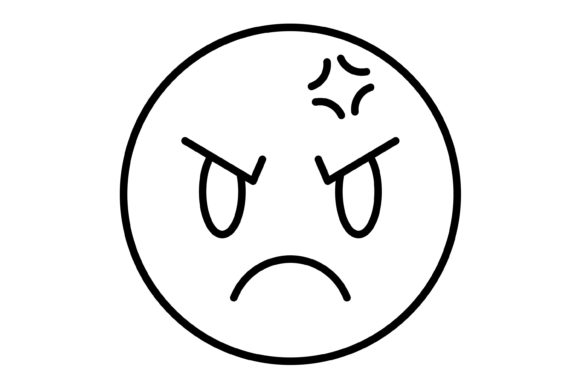
At its core, an outline icon is defined by its simplicity. Unlike solid or filled icons, outline versions use thin, consistent lines to form the shape of the object. This style is often preferred in modern, minimalist design because it feels lighter on the page and allows the background to show through. The Angry Emoji Outline Icon typically features the recognizable facial features associated with displeasure—furrowed brows, a downturned mouth, or clenched teeth—rendered in clean strokes.
The true value of this asset lies in its vector-based nature. This means the image is constructed using mathematical equations rather than a fixed grid of pixels. For the end user, this translates to infinite scalability. You can expand this icon to the size of a billboard or shrink it down to a tiny button on a smartwatch, and the lines will remain crisp and sharp. There is no pixelation, no blurring—just pure, clean geometry.
The Technical Advantage: File Formats Explained
A common frustration for designers and developers is downloading an asset only to find it is in the wrong format for their specific software. To solve this, a high-quality icon pack usually includes a comprehensive range of file types. A robust package containing an Angry Emoji Outline Icon set typically comes zipped with five distinct formats: AI, EPS, JPG, PNG, and SVG.
- AI (Adobe Illustrator): This is the native format for Adobe Illustrator. It is the best choice for professional designers who need to access layers, anchor points, and advanced editing features. If you need to change the line thickness or alter the shape of the eyebrows, the AI file is where you start.
- EPS (Encapsulated PostScript): This is a legacy vector format that is widely compatible with various design software, including CorelDRAW and older versions of Illustrator. It ensures that vector data is preserved when moving between different programs.
- SVG (Scalable Vector Graphics): This is the gold standard for web development. SVGs are code-based vector files that load quickly in browsers and can be manipulated with CSS and JavaScript. They are essential for responsive websites.
- PNG (Portable Network Graphics): These are raster images, but with a crucial feature: transparent backgrounds. This allows you to place the angry emoji icon over any color or image without a white box surrounding it. This is vital for presentations and social media graphics.
- JPG (Joint Photographic Experts Group): While JPGs do not support transparency, they are universally viewable on almost any device. They are useful for quick mockups or situations where file size is a priority and editing is not required.
Practical Applications for Professionals and Beginners
The utility of an angry expression in design is broader than one might initially think. While it obviously represents "dislike" or "anger," it is also a functional tool for User Interface (UI) and User Experience (UX) design.
Mobile App Development
If you are developing a feedback form within a mobile app, you often need a scale of reactions. The Angry Emoji Outline Icon serves as the anchor for the negative end of that spectrum. Because it is a vector, it integrates seamlessly into iOS (using SVG or PDF assets) and Android (using XML vector drawables) environments. It ensures that the feedback mechanism looks professional on high-resolution retina displays.
Web Design and Prototyping
On websites, these icons are frequently used in comment sections, reaction bars, or "error" states. For example, a 404 error page might use a subtle, outline angry face to apologize to the user for the broken link in a friendly, non-threatening way. The outline style ensures the icon does not overwhelm the text content, maintaining a balanced visual hierarchy.
Presentations and Education
Educators and corporate trainers can use the icon in slide decks to represent "Pain Points" or "Problems" in a workflow analysis. Instead of a bullet point saying "Issues," a small, consistent icon can visually trigger the audience to understand that this section discusses challenges. Similarly, in educational apps for children, the icon can be used to gamify learning, perhaps indicating an incorrect answer in a quiz.
Design Features and Scalability
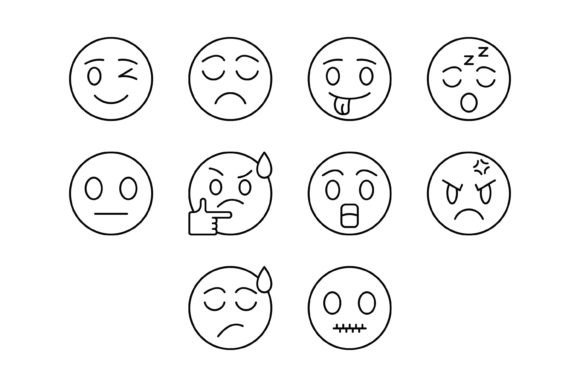
When selecting an icon pack, consistency is key. A professional set containing 100 vector icons ensures that the Angry Emoji Outline Icon matches the style of other icons you might use, such as a "Happy" or "Neutral" face. This visual consistency is crucial for branding.
The "Easy to edit and scale" feature cannot be overstated. In a fast-paced environment, a freelancer might need to adjust the color of the icon to match a client's specific brand hex code. With a vector file, this takes seconds. In contrast, trying to recolor a low-quality raster image often results in jagged edges or color artifacts.
Furthermore, the inclusion of a transparent background in the PNG format is a massive time-saver. It removes the tedious task of manually clipping paths or using magic wand tools to remove white backgrounds, which often eat into the edges of the icon and ruin the design.
Key Considerations Before You Start
Before integrating the Angry Emoji Outline Icon into your project, there are a few practical considerations to keep in mind:
- Licensing: Always verify the license of the icon pack. Ensure it allows for commercial use if you are building a product for a client or selling a template. "Free for personal use" does not always cover business applications.
- Visual Tone: Outline icons are generally friendlier than solid, filled icons. However, the specific design of the "angry" expression matters. Some designs look cartoonish, while others look realistic. Ensure the style of the icon matches the tone of your project. A corporate banking app might require a very subtle, abstract icon, whereas a gaming site can handle a more expressive style.
- Accessibility: When using icons, especially those conveying emotion, always consider accessibility. Not everyone can interpret an icon immediately. It is best practice to pair the icon with text (e.g., "Bad Experience") or ensure proper Alt Text is used in the code for screen readers.
Conclusion
The Angry Emoji Outline Icon is more than just a graphic; it is a communication tool. By utilizing the provided formats—AI, EPS, JPG, PNG, and SVG—you gain the flexibility to apply this asset across any platform, from high-end print media to lightweight mobile apps. For the modern creator, having access to scalable, easy-to-edit vector icons is essential for maintaining a professional workflow. Whether you are illustrating a point in a presentation or designing a feedback loop for a new app, this icon provides the clarity and quality needed to get the message across effectively.