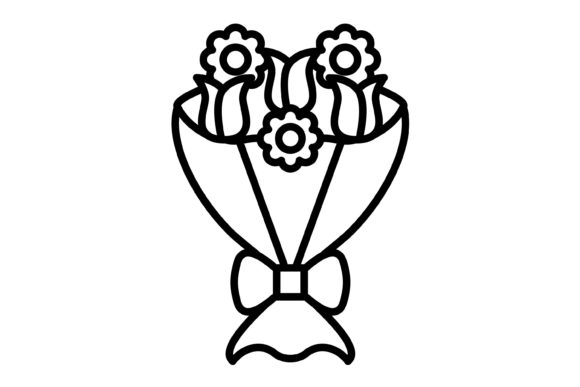
Flower Bouquet Outline Icon: Versatile Vector Design
In the world of digital design, a single element can carry significant weight. A Flower Bouquet Outline Icon is more than just a decorative mark; it is a versatile visual shorthand for celebration, nature, appreciation, and elegance. Its clean, linear form allows it to communicate a specific feeling without overwhelming the overall design composition. This particular icon, available in a comprehensive asset pack, offers a foundation for countless creative projects, providing both aesthetic appeal and functional clarity.
The true power of this asset lies in its adaptability. As a vector outline, it maintains perfect sharpness at any size, from a tiny favicon on a browser tab to a large-scale print on a poster. This scalability is essential for modern creators who work across multiple platforms. The design prioritizes usability, ensuring that each line is intentional and contributes to a recognizable silhouette. This focus on a clean, uncluttered form makes it a reliable component in any designer's toolkit, ready to be integrated into complex layouts or used as a standalone feature.
Practical Applications for Every Creator
Consider the needs of a small business owner launching a new line of botanical soaps. The Flower Bouquet Outline Icon can serve as the cornerstone of their brand identity. It can be used on product packaging, embedded in the website header, featured on social media profile pictures, and even printed on thank-you cards. Its simplicity ensures it works equally well in black and white on a shipping label as it does in a vibrant color on an Instagram story. This consistency helps build a professional and cohesive brand image that customers recognize and trust.
For a freelance designer or a blogger, the icon becomes a flexible element for content presentation. Imagine a food blog post about edible flowers; the icon can be used as a custom bullet point for ingredient lists or as a subtle watermark on recipe images. A designer creating a presentation for a wellness brand can use the icon to accentuate key points, creating a visual rhythm that guides the audience's attention. Because it is part of a set of 100 vector icons, finding complementary symbols for related concepts—like a leaf or a heart—is straightforward, ensuring visual harmony throughout the project.
File Formats for Seamless Integration
The asset's value is greatly enhanced by the variety of file formats included. Understanding these formats helps you choose the right one for your specific task, ensuring a smooth workflow and professional results.
- SVG (Scalable Vector Graphics): This is the ideal format for web and app development. SVGs are lightweight code files that render perfectly on any screen resolution. They are easily styled with CSS, allowing you to change colors, stroke widths, and even add simple animations directly within your website's stylesheet.
- AI and EPS (Adobe Illustrator and Encapsulated PostScript): These are the standard vector formats for print and advanced editing. They allow for complete customization of the icon within design software like Adobe Illustrator or Affinity Designer. You can adjust every anchor point, combine elements, or create entirely new compositions from the original design.
- PNG (Portable Network Graphics) with Transparent Background: This raster format is perfect for quick use in applications where vector editing isn't possible or necessary. The transparent background allows the icon to be placed over any color or image without a white box around it. It's excellent for use in word processors, presentation software, and simple graphic design tools like Canva.
- JPG (Joint Photographic Experts Group): While not ideal for icons due to its lack of transparency and lossy compression, a high-quality JPG can be useful for quick mockups or situations where file size is a primary concern and the background is known to be solid and light-colored.
Inspiring Creative Directions
Beyond direct application, the Flower Bouquet Outline Icon can spark broader creative concepts. An educator developing materials for a botany unit could use the icon as a starting point for a student activity, asking learners to modify it to represent different flower species. This teaches both design thinking and botanical knowledge in an engaging, hands-on way.
A marketer planning a seasonal campaign for Mother's Day or a spring sale can build a entire visual theme around the icon. They might create a series of social media posts where the bouquet is gradually filled with color, or use it as a frame for customer testimonials. The outline style suggests a "coloring in" or "blooming" metaphor that can be very effective in storytelling.
For those focused on illustration and templates, the icon serves as a perfect starting point. A designer could use it as a base layer in a digital illustration, adding detailed shading, textures, and complex color palettes to transform the simple outline into a rich, detailed artwork. Template creators for platforms like Canva or Adobe Spark can include this icon as a versatile element for users to incorporate into their own designs, from wedding invitations to business flyers.
Maintaining Effectiveness and Originality
When using a popular design element like a flower bouquet, the key to standing out is in the execution. Start by considering the context and audience. A icon used for a luxury perfume brand will be styled differently than one used for a community garden project. Adjust the stroke weight, color, and surrounding typography to match the intended tone.
Think about composition. Don't just place the icon in the center of a blank page. Use the principles of design—alignment, proximity, contrast, and repetition—to integrate it purposefully. Align it with text blocks, use it to create a visual border, or repeat it at a smaller scale to create a pattern. This thoughtful placement elevates the design from simply having an icon to being a well-considered layout.
Finally, use the provided formats to your advantage. The vector files (AI, EPS, SVG) are your tools for true customization. Change the color to match a client's brand palette exactly. Simplify the lines further for a more minimalist look. Combine it with another icon from the set to create a new, unique symbol. The goal is to use the asset as a building block for your own ideas, not as a final, unchangeable product. By doing so, you ensure your work remains clear, effective, and uniquely yours.