Book Outline Icon: A Comprehensive Guide to Versatile File Formats and Applications
In the world of digital design, the choice of an icon set is more than a simple aesthetic preference; it is a foundational decision that impacts workflow, scalability, and the final user experience. When evaluating resources like the Book Outline Icon collection, the core value lies in its technical execution and adaptability. This particular set stands out due to its inclusion of five distinct file formats—AI, EPS, JPG, PNG, and SVG—specifically engineered for high performance across mobile apps, websites, and print media. Unlike rigid, single-format assets, this collection is designed to bridge the gap between web development and graphic design, ensuring that whether you are working in a code editor or a layout program, the assets remain crisp and functional.
Analyzing the File Format Ecosystem
The true utility of the Book Outline Icon set is unlocked through its multi-format availability. For professionals comparing options, understanding the specific use case for each file type is essential for an efficient workflow.
The inclusion of SVG (Scalable Vector Graphics) is perhaps the most critical feature for modern web and app development. SVGs are resolution-independent, meaning they maintain perfect clarity on high-density displays like Retina screens without increasing file size. This makes the Book Outline Icon ideal for responsive web design and mobile applications where performance and visual fidelity are paramount.
Conversely, the AI (Adobe Illustrator) and EPS (Encapsulated PostScript) formats cater to the design phase. These vector files allow for deep customization. If a designer needs to adjust the stroke weight, change the color palette to match a specific brand identity, or merge the icon with other vector elements, these formats provide the necessary control. This level of editability is a significant tradeoff when compared to rasterized formats; while vectors require specialized software to edit, they offer infinite scalability that raster images cannot match.
For contexts where vector editing is unnecessary, the PNG files offer a practical solution. With a transparent background, these icons can be dragged and dropped directly into presentations, social media graphics, or templates without worrying about white boxes surrounding the image. The JPG format is also included, which is useful for lightweight web backgrounds or scenarios where transparency is not required and file size is a priority, though it lacks the lossless quality of the PNG or the scalability of the SVG.
Evaluating Design Philosophy: Usability and Minimalism
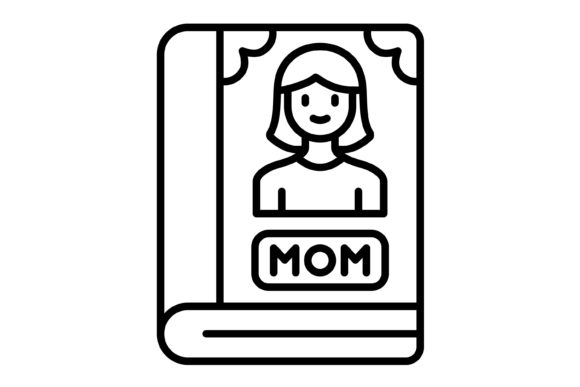
The Book Outline Icon set is defined by its line-art style. This minimalist approach is not merely a stylistic choice but a functional one. In user interface (UI) design, outline icons are often preferred for navigation bars and toolbars because they are less visually heavy than solid or glyph-style icons. They provide a clear affordance without cluttering the interface, which is crucial for maintaining a clean aesthetic in mobile apps.
However, this approach involves specific tradeoffs. While outline icons offer elegance, they can sometimes lack the visual weight needed for high-contrast accessibility requirements or small display sizes where details might get lost. When evaluating whether this style is the right fit, consider the background color and the target device size. For instance, on a complex, image-heavy website, a slightly bolder icon style might be more effective than a delicate outline. The Book Outline Icon set mitigates this somewhat by offering vector formats, allowing designers to manually thicken strokes if the specific deployment scenario demands it.
Strategic Comparison: When to Choose This Set
When researching icon libraries, users often weigh the decision between purchasing a curated set like this or using a massive, generic open-source library. The primary advantage of the Book Outline Icon collection is cohesion and intent. Large generic libraries often suffer from inconsistent styling—where one icon has rounded corners and another has sharp edges, or stroke weights vary wildly. This set guarantees visual consistency across all 100 icons, which is vital for professional branding.
Furthermore, the "Ready to use" nature of these assets saves significant time. Instead of spending hours converting files or removing backgrounds from stock images, the inclusion of transparent PNGs and optimized SVGs accelerates the prototyping and deployment process. This is particularly beneficial for teams working on tight deadlines or freelancers managing multiple projects.
However, if your project requires a very specific, complex pictogram rather than a standard outline, or if you are working within a strict ecosystem that only accepts a specific proprietary format (like certain icon fonts), this set might require conversion steps. It is also worth noting that while the set includes 100 icons, which is substantial for most projects, it may not cover every edge-case scenario in a large enterprise application, necessitating the use of supplementary assets.
Practical Applications and Best-Fit Scenarios
The versatility of the Book Outline Icon makes it suitable for a wide array of professional environments.
- Mobile App Development: Using the SVG format, developers can implement these icons directly into iOS and Android projects. Because they are vectors, the app size remains small, and the icons scale perfectly across different device resolutions.
- Web Design and UI/UX: The icons can be integrated into CSS or HTML frameworks. Their clean lines make them excellent choices for "empty state" illustrations or feature lists on landing pages.
- Print and Presentation: For educators or business professionals, the AI and EPS formats allow for high-resolution printing. Whether creating a textbook cover, a slide deck, or a brochure, the icons will not pixelate.
- Templates and Themes: Designers creating WordPress themes or Canva templates can bundle these icons as value-added assets for their users, knowing they are licensed and formatted for broad compatibility.
Decision Factors for the Professional Buyer
Ultimately, choosing the Book Outline Icon comes down to prioritizing flexibility and quality. If your workflow involves moving between design software (like Illustrator or Figma) and development environments (like VS Code), the inclusion of both AI/EPS and SVG files makes this set a robust choice. It eliminates the friction of file conversion and ensures that the design intent is preserved from the mockup stage to the final product.
For those evaluating alternatives, consider the specific "100 vector icons" count. If your project requires thousands of icons to cover every possible category, a subscription-based library might be more economical. However, for targeted projects—such as a literature app, an educational platform, or a documentation portal—having a focused, high-quality set of 100 icons is often superior to sifting through thousands of mediocre ones.
In summary, the Book Outline Icon collection offers a balanced solution that respects the technical demands of modern design while providing the aesthetic consistency required for professional branding. By offering transparent PNGs, scalable SVGs, and editable vectors, it empowers creators to work faster and smarter across all platforms.